
 PORTENT 2026 Technology Showcase
July 9, 2026 | 5:00-6:00 PM
Griffis Faculty Club, New York City
The PORTENT 2026 Technology Showcase will bring together our current PORTENT performer teams along with a select group of companies from the New York City/ Cornell ecosystem developing promising point-of-care diagnostics, digital health tools, clinical screening technologies, monitoring platforms, and related medical technologies. Join us to connect with startups, investors, industry partners, clinicians, researchers, students, commercialization experts, and others interested in advancing point-of-care health technologies. Register here

PORTENT advances promising Point of Care technologies through:
Technology Development | Human Validation | User and Developer Training and Rotations | Commercialization
PORTENT translates breakthrough point-of-care diagnostics into rapid, affordable tests that reduce the burden of chronic disease, curb infectious threats, and strengthen prevention efforts across the United States. By integrating technology development with clinical validation, training, and lab-to-market programs, PORTENT accelerates earlier detection of conditions – from diabetes, heart disease to emerging infections – so providers can intervene sooner, patients stay healthier, and health care costs decline.
OUR GLOBAL PRESENCE

The PORTENT Center is unique as it:
Focuses on primary health care globally
Addresses the needs of the most vulnerable in the US and internationally
Enables validation of diagnostic technologies on a global range of populations and with a unique set of users
Develops expertise and strengthens capacity worldwide to have the most impact even beyond the center
One-of-a-kind international network of clinical, training, and device development facilities
Unique worldwide expertise in Point of Care diagnostics, their application and commercialization
Integrated clinical core and validation facilities across four continents: North America (United States), Africa (Uganda), South America (Ecuador) and Asia (India)
APPROACH & RESOURCES


NEWS & EVENTS
PORTENT backs five new technologies to expand access to care
April 10, 2026
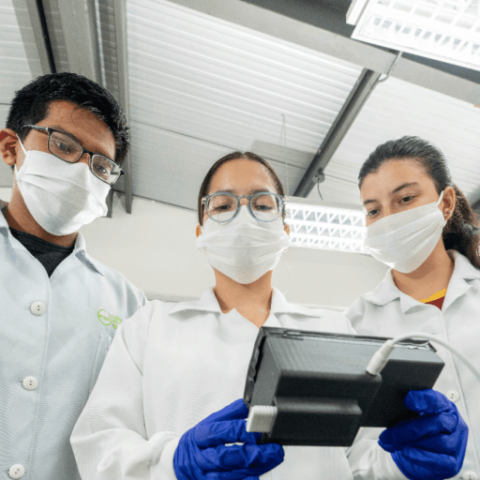
Five next-generation point-of-care technologies have been selected for funding by PORTENT, a Center for Point-of-Care Technologies for Nutrition, Infection, and Cancer at Cornell, focusing on developing enhanced diagnostics, and aimed at reducing delays and improving access for crucial healthcare across the globe…READ MORE

Cornell researchers awarded grant to advance tuberculosis diagnostics
December 1, 2025
A project led by Cornell’s Center for Point of Care Technologies for Nutrition, Infection and Cancer (PORTENT) to develop a low-cost, battery-powered device for sample preparation in tuberculosis (TB) testing in areas with limited lab access and infrastructure, has received a $250,000 grant from the Gates Foundation….READ MORE
OUR PARTNERS